


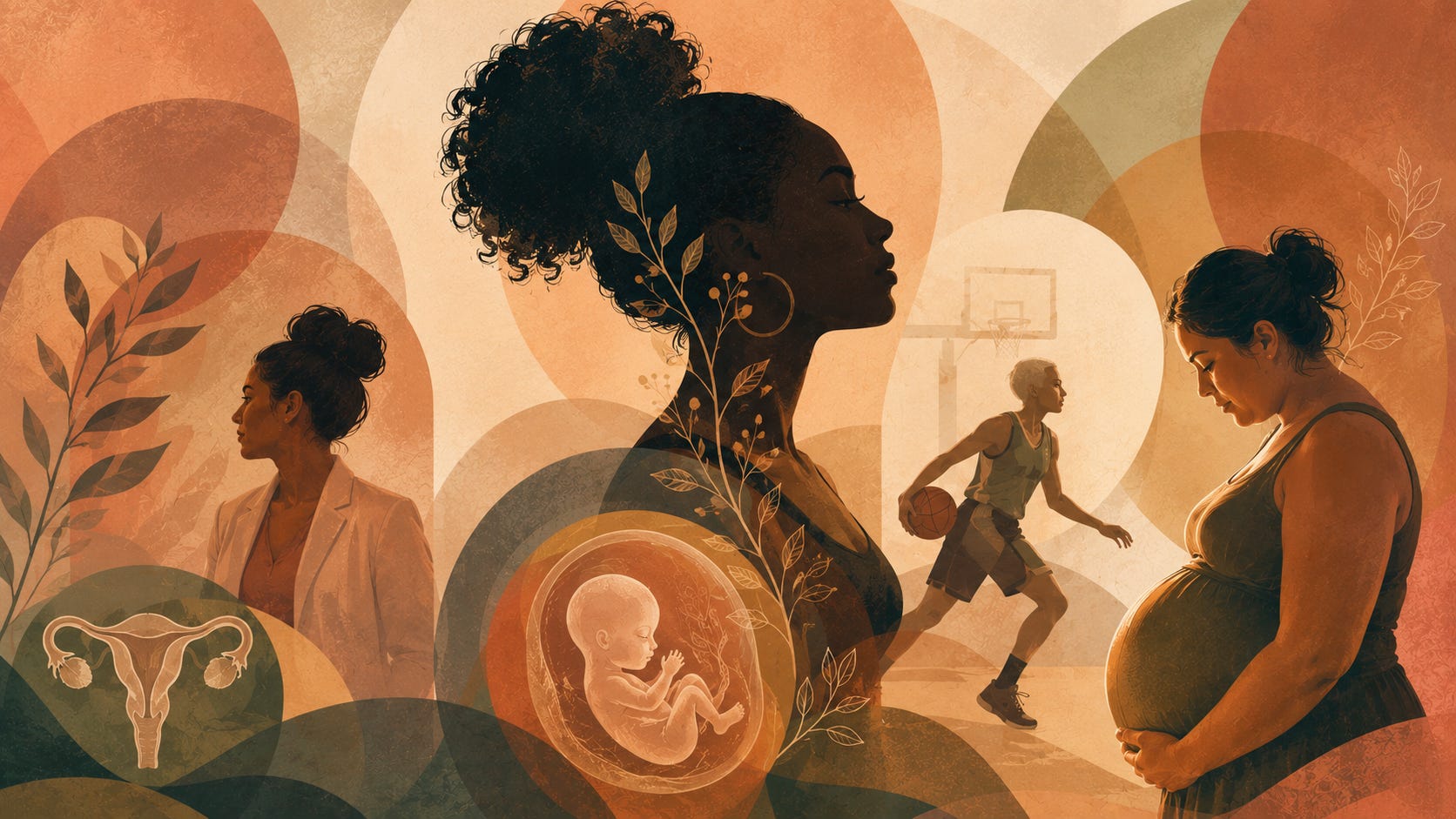
There is something that has become refreshingly ordinary about a mid-30’s woman freezing her eggs, as Alexandria Ocasio-Cortez recently revealed that she had just done. However because nearly everything involving AOC becomes partisan immediately, it didn’t take long for the commentary to turn to her age, her career, her choices, and whether she should have simply had children sooner.
I’m not in the habit of defending AOC, but I’m not sure what there is to mock here. A woman in her mid-thirties knows she may want children later and also knows her fertility won’t wait indefinitely for her to make up her mind. She made a decision accordingly. There is nothing shameful or anti-feminist about that. A woman can spend her young adulthood pursuing an education, building a career, making art, traveling, getting involved in politics, or doing whatever else gives her life meaning while understanding that her reproductive system is operating on its own ‘biological clock’.
Women can decide when—or whether—we want children, but we cannot decide for our ovaries to remain 25 forever. Saying so isn’t misogyny or conservative propaganda. It’s just a fact of living in a female body.
What interests me is how selectively comfortable our culture has become with facts like this. Female biology is readily acknowledged when a woman is sitting in a fertility clinic hoping medicine can help her work around its limitations, but mention the significance of that same biology in another context—particularly one where sex creates a boundary—and suddenly the subject becomes much more uncomfortable. Female biology has a way of exposing the limits of treating sex as negotiable.
More Than Our Bodies
For generations, feminists fought against the idea that biology was destiny. Women could be mothers without motherhood being the entirety of a woman’s existence. We could enter professions once reserved for men, build businesses, hold office, and construct lives that were not dictated entirely by our reproductive capacities. None of that required denying that men and women are biologically different.
Somewhere along the way, though, “biology is not destiny” started to morph into biology itself becoming almost impolite to mention. Saying women are more than our bodies increasingly seems to come with an expectation that we pretend our bodies tell us nothing meaningful about what women are.
But “more than” does not mean “unrelated to.” A woman is obviously more than her reproductive system, chromosomes, physical strength, or ability to become pregnant. She still inhabits a sexed body and sometimes that matters a lot.
Fertility medicine makes that especially hard to ignore. Reproductive technology can give women options previous generations didn’t have, but it cannot abolish biological sex. An egg and sperm perform different reproductive functions. Ovaries and testes are different organs. Male and female fertility do not age in the same way. And regardless of how technologically sophisticated reproduction becomes, pregnancy still requires a female body. Medicine can help us work with or around some biological realities but it cannot make them cease to exist.
Until Biology Becomes Inconvenient
Only days after writing about Sophie Cunningham and the strange partisan sorting around women’s sports, there’s been another development. The WNBA has reportedly started and will be continuing discussions about “transgender” eligibility.
Mind you, there is a Women’s National Basketball Association because elite male and female athletes are separated by something more substantial than identity. Sexual dimorphism affects height, muscle mass, bone structure, strength, speed, and power…the physical consequences of male puberty don’t disappear simply because acknowledging them has become politically uncomfortable.
Without a female sporting category, women would lose meaningful opportunities to compete. That is the entire reason the category exists. Yet we have somehow reached a point where saying what makes that category necessary can itself be treated as controversial.
That’s what makes the juxtaposition with the AOC story stand out to me. When a 36-year-old woman worries about her future fertility, nobody seriously disputes that her sex matters enough to shape the medical decisions available to her. Put a female athlete on a basketball court, though, and recognizing bodily differences suddenly becomes exclusionary. Female biology is real enough to freeze eggs over, real enough to medicate and monitor, and real enough for women to spend thousands of dollars trying to preserve her reproductive possibilities…yet in another setting, it can apparently become too impolite to define.
This isn’t as much about basketball as it is about when our culture permits sex to matter. There seems to be little discomfort acknowledging biological sex when technology is helping women overcome one of its constraints. The discomfort appears when recognizing sex means drawing a boundary. But reality doesn’t become less real because one of its implications is inconvenient.
When Women Become Functions
That selective relationship with biology also shows up in the language of modern reproduction. Assisted reproductive technologies have given families possibilities previous generations scarcely could have imagined. But the language surrounding these technologies can reveal something unsettling about how institutions increasingly talk about women’s bodies.
A woman can become an “egg provider”, another becomes a “gestational carrier.” Pregnancy—the months-long process in which a woman’s body grows, nourishes, and ultimately delivers another human being—can start sounding like a service performed by a body assigned a reproductive function.
I understand why clinical terminology exists. Medicine needs precise language and complicated reproductive arrangements sometimes require terms that distinguish one person’s role from another’s. However, language also shapes how we think about the people being described. Calling a pregnant woman a “gestational carrier” can make the woman and the pregnancy sound strangely separable, as though her body is simply the location where someone else’s baby happens to be developing.
Pregnancy itself tells us otherwise. The pregnant woman’s health, hormones, blood, nutrition, medications, illnesses, and environment all have the potential to matter. Her body isn’t merely containing the pregnancy, it is actively sustaining it. Reproductive technology may allow eggs, sperm, embryos, and gestation to be divided among different people, and commercial arrangements may assign legal roles to each of them, but none of that makes the biological relationship between a pregnant woman and the developing child imaginary.
This is where I think liberal feminism should be especially wary. A culture supposedly concerned about reducing women to our biology has become remarkably comfortable describing women by individual biological functions while sometimes hesitating to use the word woman at all. We get egg provider, gestational carrier, birthing person, lactating person, body with a uterus.
There’s something very backwards about that. Women were once warned against allowing ourselves to be defined by our reproductive organs; now, in the name of inclusion, institutions can avoid defining women while describing us almost entirely through those organs.
The Truth Is Not an Insult
None of this means every woman should become a mother, that women belong in the home, that women who pursue careers are somehow less devoted to their families, or that a woman’s worth declines along with her fertility. What women deserve is truthful information about the bodies in which we actually live.
That matters to the woman who never wants children and to the woman wondering whether she should freeze her eggs. It matters to the woman struggling with infertility and to the woman who is pregnant. It matters to the female athlete who wants a fair competition, and it matters to girls who deserve to understand their bodies before they are old enough to confront any of these questions themselves.
Acknowledging female biology does not diminish girls, nor should women have to pretend not to notice our bodies to prove that we are more than them. We are embodied people. Our bodies don’t dictate our personalities, intelligence, ambitions, talents, interests, or the lives we choose to build, but neither are they incidental vessels carrying some truer, disembodied version of ourselves through the world.
Sometimes being female matters. A woman may discover that when she watches her reproductive window narrow while deciding whether motherhood belongs in her future. An athlete encounters it when she steps onto a basketball court. A pregnant woman lives it every day as her body sustains another developing human being. And none of these realities make women smaller.
Yet modern institutions have become remarkably adept at producing new words and abstractions whenever biological categories create an inconvenient boundary. Reality is less cooperative: ovaries age, male puberty changes the body, human gestation still takes place inside a female body.
That shouldn’t embarrass feminism. It should remind us of something feminism once understood perfectly well: women are more than our bodies, but liberation was never supposed to require pretending we don’t have them.
Thanks for this well-argued essay.
We take our bodies and our biology for granted until something stops working the way we want it to because of disease or trauma or ageing. Ageing has an insistent way of reminding us that we are our bodies and our bodies are us. It’s possibly one of the reasons for what seems to be an enormous chasm between the generations: Those (mainly younger people) who treat medicalising healthy bodies - for the purpose of presenting as something other than their natal sex - as a human right v. those who treat such medicalisation as an affront to medical ethics (oldies like me).
May I comment? As much as I had to carefully concentrate and think while reading this, I also found it easy to read, and clearly written. I feel almost as if I'm reading my own thoughts expressed here. I also just before had read today's Substack from Stella O'Malley, where she advocates for wider acceptance for the psychologically valuable phrase, "transgender ideation".
If we can become self-aware of our efforts here, I see us as the leading edge of creating a better future for all of us. That simple, and that meaningful and hopeful, and profound. Thank-you.
KEEP UP the GOOD WORK, and let's keep playing ball fairly and freely!....