


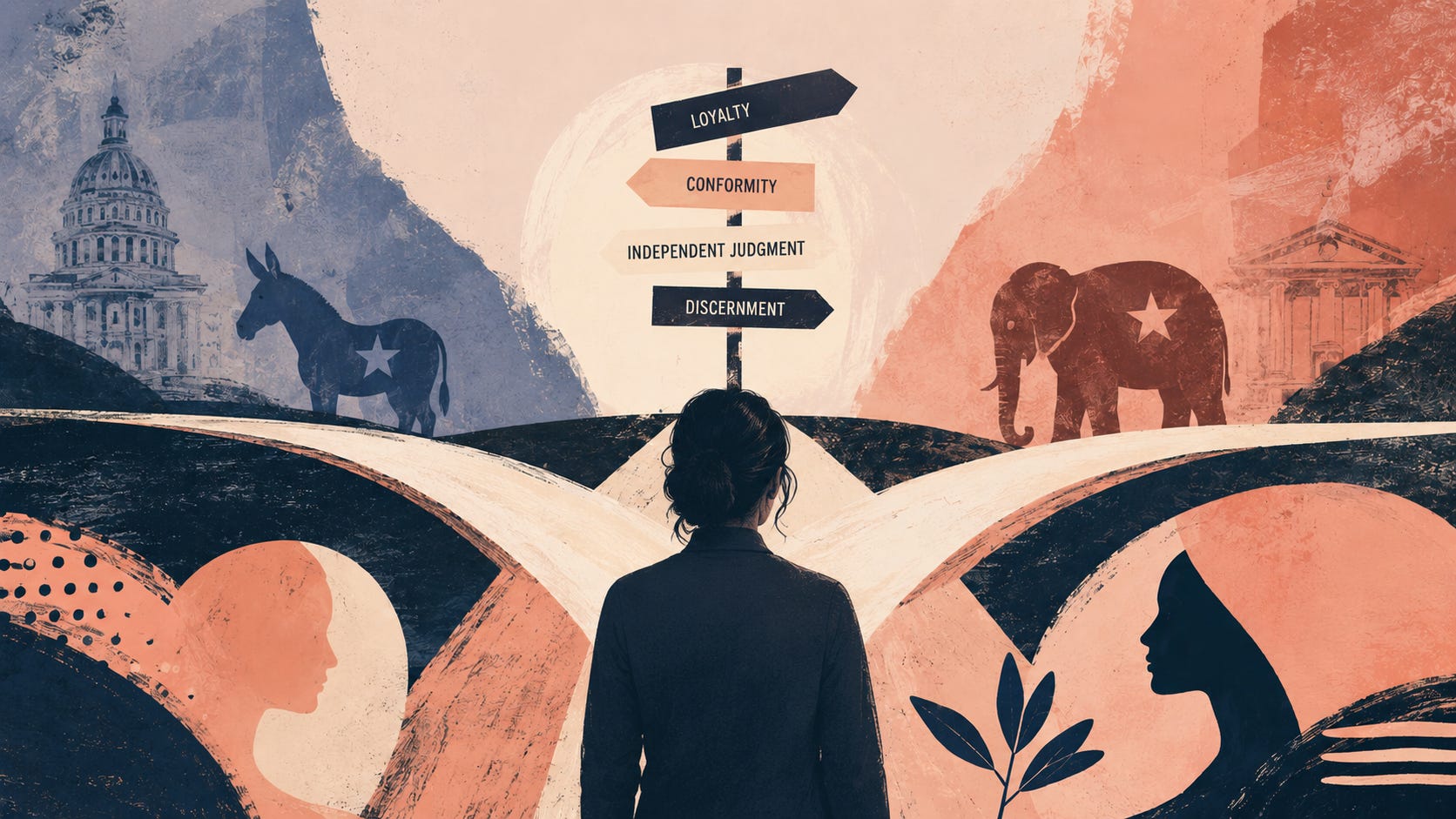
Political succession is often discussed as though it were simply a matter of replacing one set of names with another. A retirement. A death. A primary. A runoff. One politician exits the stage, another steps forward, and the machinery of politics continues uninterrupted.
But succession is rarely that simple.
The more consequential question is not who replaces whom. It is what kind of political culture produces the next generation of leadership. That question has been hanging over Georgia for months.
The passing of Congressman David Scott exposed a transition already underway within the Democratic Party. Scott belonged to an older generation of Southern Black political leadership, one shaped by faith communities, local institutions, family networks, and tangible concerns such as jobs, housing, and economic mobility. Whether one agreed with his politics or not, he emerged from a political tradition that still permitted a wider range of viewpoints and disagreements within the party.
The candidates who followed him represent something different. Dr. Jasmine Clark’s primary victory reinforced a trend that has become increasingly difficult to ignore: the next generation of Democratic leadership is operating within a far narrower ideological lane. It is no longer enough to support women, advocate for equality, or champion civil rights. Increasingly, participation requires affirming a specific framework around sex and gender, even when that framework conflicts with the concerns of many women.
Keisha Lance Bottoms made this dynamic particularly visible during the gubernatorial primary when she stated that she would have vetoed the Riley Gaines Act. Bottoms is accomplished, intelligent, and experienced. That is precisely the point.
The narrowing within Democratic politics is not occurring because candidates lack qualifications. Quite the opposite. Even highly capable leaders appear constrained in what they are politically incentivized to prioritize when those priorities conflict with prevailing party expectations. What makes this particularly striking is that the narrowing persists even when public opinion points elsewhere. Opposition to male participation in women’s sports is not a fringe position in Georgia, nor is it confined to Republicans. Yet many Democratic politicians increasingly behave as though acknowledging those concerns carries greater political risk than ignoring them.
At the same time, Republicans are experiencing a succession crisis of their own. The Senate runoff between Derek Dooley and Mike Collins is not merely a contest between two candidates. It is a reflection of the political incentives that have come to dominate the Georgia Republican Party.
For nearly a year, I have argued that the party has developed a habit of rewarding loyalty before judgment, visibility before scrutiny, and spectacle before substance. The recent revelations surrounding Collins’ staff only reinforce the concern: a campaign manager forced out after mocking a woman who had publicly accused a prominent media figure of rape, ethics questions involving senior aides, and a chief of staff explaining his participation in a group chat that included prominent white nationalists and Holocaust deniers. In the first case, the woman had also spoken publicly about a subsequent suicide attempt, making the episode especially difficult for many voters to dismiss as ordinary campaign roughness.
Republicans already learned this lesson with Herschel Walker. Or at least they should have. Instead, the party continues to operate as though attention is evidence of leadership and proximity to Donald Trump is a governing philosophy.
What makes this moment politically significant is not that Democrats and Republicans disagree with one another. Political disagreement is normal. The more striking reality is that both parties increasingly punish independent judgment.
Democrats reward ideological conformity. Republicans reward personal loyalty. The subjects are different. The mechanism is remarkably similar.
A Democratic politician who departs from party orthodoxy on sex-based rights risks professional isolation. A Republican politician who departs from Trump risks political extinction. In both cases, the incentive structure discourages independent thinking and rewards obedience. That leaves voters facing a problem that neither party seems particularly interested in acknowledging.
Demographic representation and political independence are not the same thing. Representation without independence eventually becomes performance.
This matters because both parties continue selling voters a version of politics rooted in symbolism rather than substance. Democrats point to diversity, historic firsts, and demographic milestones. Republicans point to outsiders, fighters, and anti-establishment credentials. Yet neither guarantees what voters are actually looking for: leaders capable of exercising independent judgment when it matters.
Georgia women are routinely told to overlook concerns about sports, privacy, language, and sex-based rights in the name of broader progressive goals. At the same time, they are asked by Republicans to overlook conduct and judgment they would find unacceptable in almost any other context, simply because defeating Democrats is deemed more important.
Neither offer what many women are seeking.
The consequences of these patterns are already visible. Democrats continue narrowing the range of acceptable opinion while Republicans struggle to produce alternatives capable of earning broad trust.
When voters are repeatedly told to choose the lesser of two evils, the problem is not simply electoral. It is cultural. Political participation depends on more than fear of the other side. It depends on the belief that at least one option is worthy of support. A healthy political system produces candidates people want to vote for. An unhealthy one increasingly relies on convincing voters whom they must vote against. That dynamic can sustain elections for a time, but it is far more difficult to sustain enthusiasm, trust, or civic engagement. Eventually, voters begin to notice when politics feels less like a choice and more like an exercise in avoidance.
Democrats increasingly package conformity in the language of professionalism. Republicans increasingly package conformity in the language of populism. Independent voters are left choosing between different forms of obedience while searching for evidence of genuine leadership.
As Georgia’s political succession continues, the more important question is not who comes next, but what kind of leadership the parties are producing. Can either party still tolerate independent judgment? Can a Democrat defend women’s sex-based rights without professional consequences? Can a Republican challenge Trump without political consequences? Can either party reward discernment more than loyalty?
For Georgia women, that uncertainty is not abstract. It shapes the choices placed before us every election cycle. We are repeatedly asked to choose between teams when what many of us are looking for is something far simpler: leaders willing to place reality above ideology, judgment above loyalty, and the interests of the people they represent above the demands of the political tribe to which they belong.
As both parties undergo their own succession struggles, that may be the quality in shortest supply.
In Ca , SF in particular , it is political suicide not to affirm the party line which includes trans women are women , and Israel is engaged in genocide. For the vast majority of working people and families it does not speak to their most basic concerns. The Democrats are no longer the party of working people. The abandonment of women and girls here goes on without question and is even supported by the Teacher's Union and the Nurses Union which are overwhelmingly female.
What is particularly concerning is young "progressives" who are the forefront of promoting this and are the future of the Democratic party. To attempt to be a grownup here is to commit heresy. I do not see how we get out of this and the lesser of two evils is still evil.
Well put, Kristin. It's almost easier in Tenn because my vote wouldn't count for much there. It's Lisa Russell, I forgot my nom de guerre on here 🤠